Email Us

A Professional Guide to Measuring Hydraulic Seals: Ensuring a Perfect Fit for Your Cylinder


Table of Content [Hide]

    Accurate measurement is the cornerstone of effective hydraulic seal replacement. A perfectly fitted seal ensures optimal performance, prevents leaks, and extends the lifespan of your hydraulic cylinders. Conversely, an incorrectly sized seal can lead to premature failure, costly downtime, and compromised system efficiency. This guide provides B2B professionals with a step-by-step approach to precisely measure hydraulic seals, helping to identify the right product without solely relying on often-unavailable part numbers.
    measuring_hydraulic_seals.webp

    Why Accurate Measurement is Crucial

    Hydraulic seals operate under immense pressure and are critical components in maintaining the integrity of a hydraulic system. Even a slight deviation in size can lead to:
    Leaks: Seals that are too small or improperly seated will fail to create a tight barrier, leading to fluid loss.
    Premature Wear: Oversized seals can experience excessive friction and compression, causing rapid wear and heat buildup.
    System Malfunction: Ineffective sealing can lead to pressure drops, reduced power, and overall system inefficiency.
    Downtime and Costs: Frequent seal failures necessitate repairs, resulting in costly operational interruptions and maintenance expenses.

    Essential Tools for Measurement

    Before you begin, ensure you have the following tools:
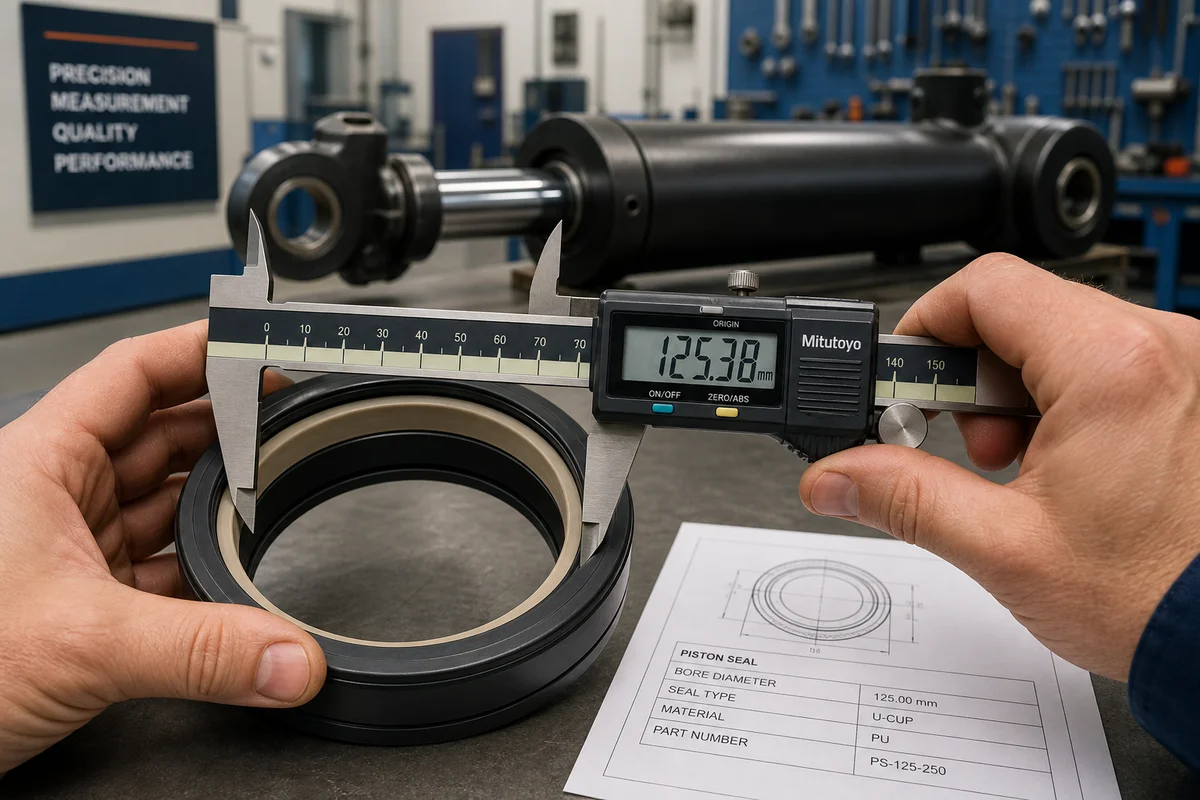
    Digital Caliper: For precise measurements of outer diameter (OD), inner diameter (ID), and thickness/height.
    Measuring Tape or Ruler: For larger components, though less precise for seals themselves.
    Seal Cross-Section Diagram: To understand the different parts of the seal and where to measure.
    Clean Cloth: To clean the seal before measurement.

    Step-by-Step Measurement Process

    Measuring hydraulic seals involves three primary dimensions: Inner Diameter (ID), Outer Diameter (OD), and Height/Thickness. It's crucial to measure both the seal itself and the gland (the housing where the seal sits) to ensure a perfect match.

    1. Measuring the Seal Itself

    a. Inner Diameter (ID)

    For Rod Seals: Measure the inside diameter of the seal. This dimension should correspond to the diameter of the rod it seals against. Ensure the seal is relaxed and not stretched during measurement.
    For Piston Seals: Measure the inside diameter of the seal. This will typically be slightly smaller than the piston diameter to create a tight fit.

    b. Outer Diameter (OD)

    For Rod Seals: Measure the outside diameter of the seal. This should be slightly larger than the gland's inner diameter to ensure proper compression.
    For Piston Seals: Measure the outside diameter of the seal. This dimension should correspond to the bore diameter of the cylinder.

    c. Height/Thickness (Axial Dimension)

    Measure the axial height or thickness of the seal. This dimension is critical for ensuring the seal fits correctly within the gland's depth without being over-compressed or leaving gaps.

    2. Measuring the Gland (Housing)

    Measuring the gland is equally important, as it provides the actual space the seal needs to occupy. This is especially useful when the old seal is damaged or distorted.

    a. Rod Gland Measurements

    Rod Diameter: Measure the diameter of the hydraulic rod.
    Gland Bore Diameter: Measure the inner diameter of the gland where the rod seal sits.
    Gland Depth: Measure the depth of the gland to ensure the seal's height is appropriate.

    b. Piston Gland Measurements

    Cylinder Bore Diameter: Measure the inner diameter of the cylinder bore.
    Piston Diameter: Measure the outer diameter of the piston.
    Gland Depth: Measure the depth of the groove on the piston where the piston seal sits.

    Tips for Accurate Measurement

    Cleanliness: Always clean the seal and the gland thoroughly before measuring to remove any debris that could affect accuracy.
    Relaxed State: Measure seals in a relaxed, uncompressed state to get their true dimensions.
    Multiple Measurements: Take several measurements at different points and average them to account for any slight irregularities or wear.
    Cross-Sectional Profile: Pay attention to the seal's cross-sectional profile (e.g., U-cup, O-ring, chevron). This affects how it fits and functions.

    Consider Swell/Shrinkage: Some seal materials can swell or shrink slightly after prolonged use due to fluid absorption or temperature changes. Factor this in if measuring an old seal.

    By following these professional measurement guidelines, B2B buyers can confidently select the correct hydraulic seals, ensuring the longevity and optimal performance of their hydraulic equipment. JR Seal provides a wide range of precisely manufactured hydraulic seals and kits to meet diverse industrial needs.


    References
    JR SEAL Latest News & Blogs
    Explore More Seal Kit Information
    Quick Links
    Reach Us
    Add:
    Room 807, Building No.7, No.36 Zhuji Road, Tianhe District, Guangzhou, China
    A5 Building, Zhucun No.6 Industrial Zone, Tianhe District, Guangzhou, China
    GUANGZHOU JIARUI SEALS CO., LTD.
    Produce sealing elements for you! Whenever and whatever you need, we can provide the best solution for you.
    To Know JR SEAL More
    GUANGZHOU JIARUI SEALS CO., LTD.
    Produce sealing elements for you! Whenever and whatever you need, we can provide the best solution for you.
    To Know JR SEAL More
    Room 807, Building No.7, No.36 Zhuji Road, Tianhe District, Guangzhou, China
    A5 Building, Zhucun No.6 Industrial Zone, Tianhe District, Guangzhou, China
    jr@jrsealing.com 020-32381126