Email Us

Choosing the Right Hydraulic Seal Material for Extreme Environments: NBR, FKM, or PU?


Table of Content [Hide]

    In the demanding world of industrial machinery, the performance and longevity of hydraulic systems heavily rely on the integrity of their seals. When operating in extreme environments—be it high temperatures, aggressive chemicals, or abrasive conditions—selecting the correct seal material is paramount. This guide delves into three common hydraulic seal materials: Nitrile Butadiene Rubber (NBR), Fluoroelastomer (FKM), and Polyurethane (PU), helping B2B buyers make informed decisions to minimize downtime and maximize operational efficiency.
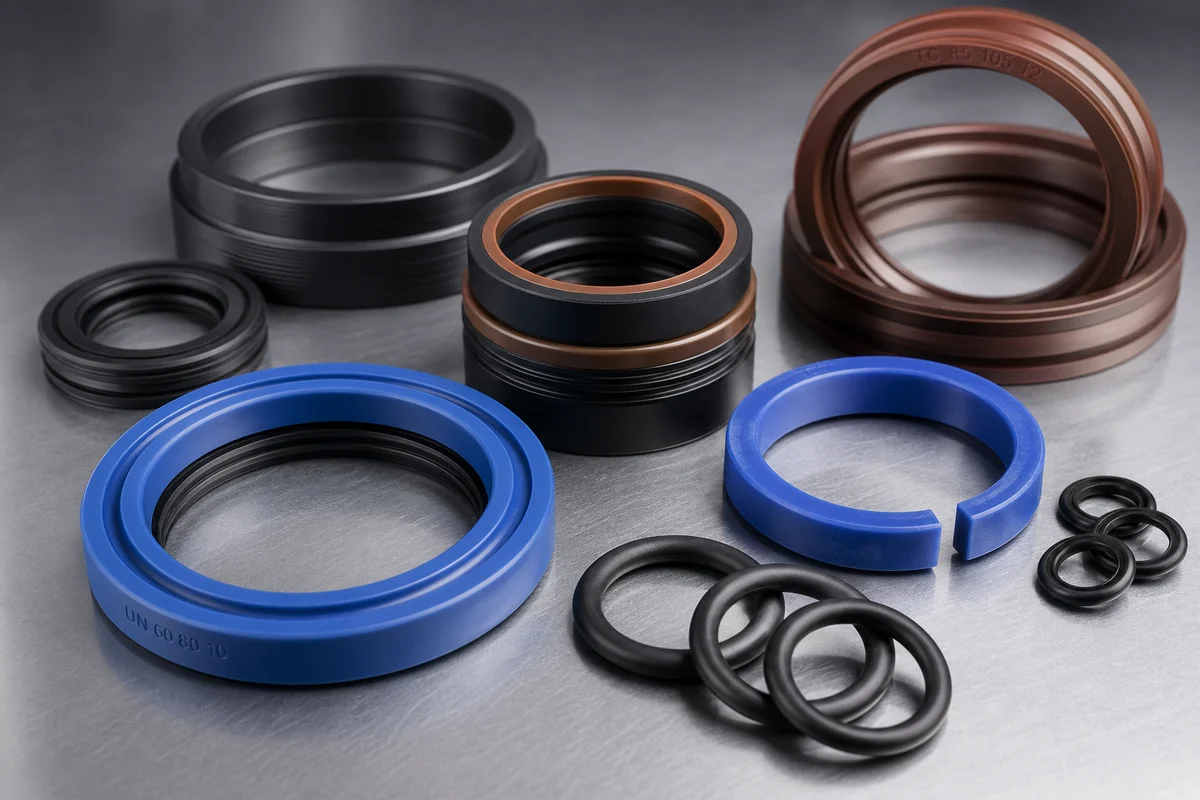
    hydraulic_seal_materials.webp

    Understanding the Core Materials

    Nitrile Butadiene Rubber (NBR)

    NBR, often referred to as Buna-N, is a synthetic rubber copolymer of acrylonitrile and butadiene. It is widely used in hydraulic applications due to its excellent resistance to petroleum-based oils and fuels, water, and some hydraulic fluids. NBR offers good abrasion resistance and tensile strength, making it a versatile choice for general-purpose sealing.
    Advantages: Good oil and fuel resistance, cost-effective, good mechanical properties, wide temperature range (-40°C to 100°C).
    Limitations: Poor resistance to ozone, weathering, and aromatic hydrocarbons. Limited high-temperature performance compared to FKM.
    Typical Applications: General hydraulic and pneumatic seals, O-rings, gaskets in standard industrial settings.

    Fluoroelastomer (FKM)

    FKM, commonly known by its brand name Viton®, is a high-performance synthetic rubber renowned for its exceptional heat and chemical resistance. It is a fluorocarbon-based elastomer that excels in environments where NBR would quickly degrade. FKM is particularly resistant to a broad spectrum of chemicals, including acids, alkalis, and various aggressive hydraulic fluids.
    Advantages: Excellent high-temperature resistance (up to 200°C), superior chemical resistance, good resistance to ozone, weathering, and UV radiation.
    Limitations: Higher cost than NBR, poor performance in hot water/steam and some brake fluids. Can be susceptible to certain ketones and low molecular weight esters.
    Typical Applications: High-temperature hydraulic systems, chemical processing equipment, automotive and aerospace applications, and environments with aggressive media.

    Polyurethane (PU)

    Polyurethane is an elastomer known for its outstanding mechanical properties, particularly its high abrasion resistance, tear strength, and load-bearing capacity. PU seals are often used in heavy-duty hydraulic applications where physical wear and tear are significant concerns. They offer a good balance of elasticity and hardness.
    Advantages: Excellent abrasion and tear resistance, high tensile strength, good elasticity, good resistance to mineral oils and greases.
    Limitations: Limited high-temperature resistance (typically up to 80°C), poor resistance to hot water, steam, and some strong acids/alkalis. Can be affected by certain solvents.
    Typical Applications: Heavy-duty hydraulic cylinder seals, rod seals, piston seals, wipers in construction, mining, and agricultural machinery.

    Comparative Analysis: NBR vs. FKM vs. PU

    To simplify the selection process, here's a comparative table highlighting the key characteristics of NBR, FKM, and PU:
    Feature
    NBR (Nitrile Butadiene Rubber)
    FKM (Fluoroelastomer)
    PU (Polyurethane)
    Temperature Range
    -40°C to 100°C
    -20°C to 200°C
    -30°C to 80°C
    Oil/Fuel Resistance
    Excellent
    Excellent
    Good
    Chemical Resistance
    Good
    Excellent
    Fair
    Abrasion Resistance
    Good
    Fair
    Excellent
    Tear Strength
    Good
    Good
    Excellent
    Cost
    Low
    High
    Medium
    Ozone/Weathering
    Poor
    Excellent
    Good

    Making the Right Choice

    Selecting the optimal hydraulic seal material requires a thorough understanding of the operating environment and specific application requirements. Consider the following factors:
    1.Temperature: Is the system exposed to extreme heat or cold? FKM is ideal for high temperatures, while NBR suits moderate ranges. PU has a more limited temperature range.
    2.Chemical Compatibility: What types of hydraulic fluids, oils, or chemicals will the seal come into contact with? FKM offers the broadest chemical resistance.
    3.Pressure and Abrasion: Will the seal experience high pressure, friction, or abrasive particles? PU's superior mechanical strength makes it suitable for heavy-duty applications.

    4.Cost-Effectiveness: While FKM offers superior performance, its higher cost might not be justified for less demanding applications where NBR or PU could suffice.


    By carefully evaluating these factors, B2B buyers can choose the most appropriate seal material, ensuring the reliability, efficiency, and longevity of their hydraulic systems. JR Seal offers a comprehensive range of hydraulic seals in various materials, designed to meet the diverse needs of industrial applications.


    References
    JR SEAL Latest News & Blogs
    Explore More Seal Kit Information
    Quick Links
    Reach Us
    Add:
    Room 807, Building No.7, No.36 Zhuji Road, Tianhe District, Guangzhou, China
    A5 Building, Zhucun No.6 Industrial Zone, Tianhe District, Guangzhou, China
    GUANGZHOU JIARUI SEALS CO., LTD.
    Produce sealing elements for you! Whenever and whatever you need, we can provide the best solution for you.
    To Know JR SEAL More
    GUANGZHOU JIARUI SEALS CO., LTD.
    Produce sealing elements for you! Whenever and whatever you need, we can provide the best solution for you.
    To Know JR SEAL More
    Room 807, Building No.7, No.36 Zhuji Road, Tianhe District, Guangzhou, China
    A5 Building, Zhucun No.6 Industrial Zone, Tianhe District, Guangzhou, China
    jr@jrsealing.com 020-32381126