English
 Indonesia

Sep 08 2026
How to Compare Hydraulic Seal Kit Suppliers Without Relying on Price Alone
Read More >
For an equipment fleet, choosing between a complete hydraulic cylinder seal kit and individual replacement seals is a procurement decision—not simply a choice between a larger or smaller order. The right option depends on the repair scope, the information available for identification, the condition of the other sealing positions, inventory rules, and how the order will be checked when it arrives.
A complete kit can simplify a planned cylinder repair when the required sealing positions have been identified. Individual seals can be practical when one confirmed component is being replaced and the remaining parts are not part of the repair scope. Neither option should be selected from a machine photo or a broad equipment description alone. The machine model, cylinder or component, reference or part number, dimensions, application, quantity, and available documentation should be checked before a supplier confirms a match.
This guide gives fleet managers, repair shops, and hydraulic parts distributors a structured way to compare the two purchasing routes.
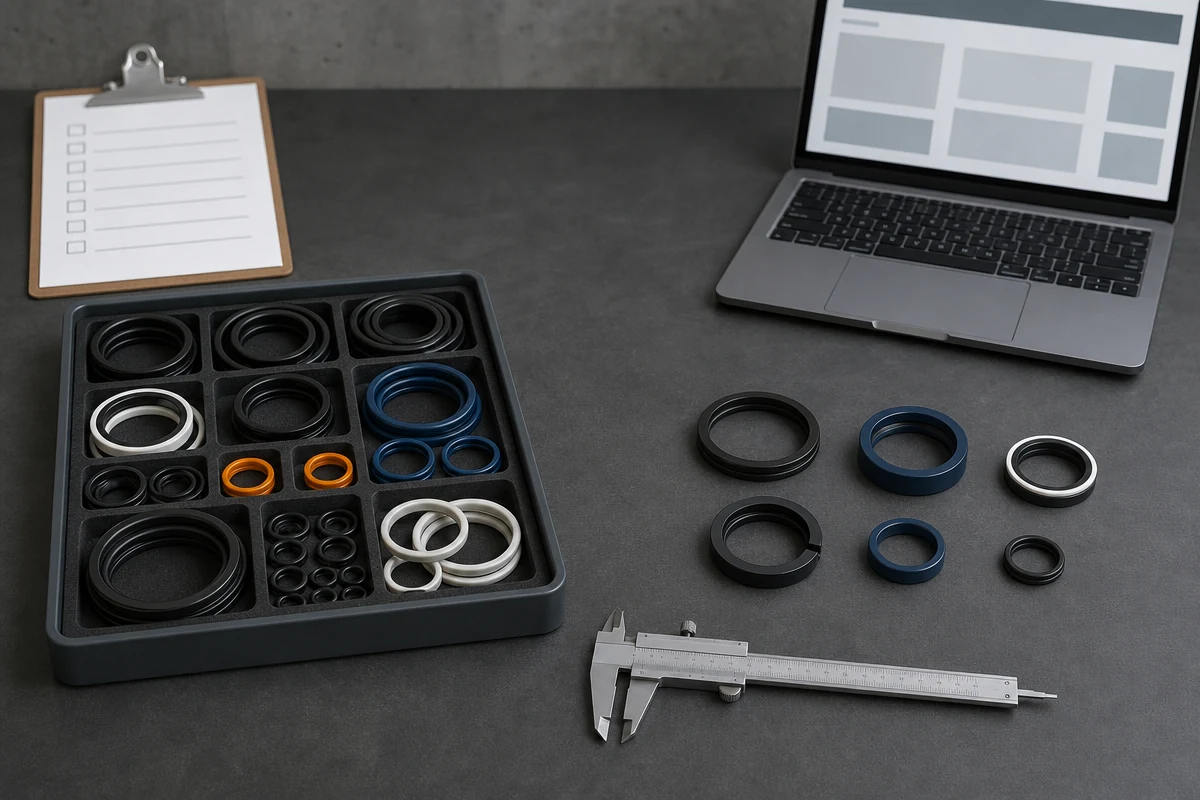
Before comparing prices or packing formats, define what the repair team is actually doing.
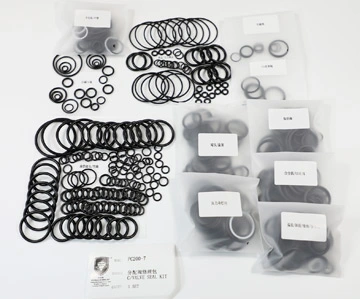
A complete hydraulic cylinder seal kit is usually considered when the repair scope includes several sealing positions in the same cylinder or when the maintenance team wants the required set of identified parts together. The order still needs to be checked against the correct cylinder, component, reference data, and application. “Complete kit” should describe the agreed kit scope, not an assumption that every seal in every cylinder is interchangeable.
Individual seals may be considered when:
The repair team has identified one damaged or missing sealing position.
The remaining seals have been inspected and are outside the current replacement scope.
The original kit is not required for the repair being performed.
A verified individual part reference is available.
The purchasing system already controls individual seal inventory and traceability.
The decision should follow the repair documentation. If the repair scope is uncertain, a supplier should not be asked to infer the complete requirement from a general machine model alone.
| Procurement factor | Complete hydraulic cylinder seal kit | Individual seals |
|---|---|---|
| Repair scope | Suitable for a defined multi-position cylinder repair when the kit contents are confirmed | Suitable when one or a limited number of sealing positions are confirmed |
| Identification | Requires the correct cylinder/component and a verified kit reference or supporting dimensions | Requires the exact individual seal reference, position, dimensions, and application |
| Inventory control | One kit record can group the agreed sealing components for a repair | Each seal needs its own item record, location, and traceability information |
| Risk of unused parts | Possible if the repair scope changes or the kit is not matched correctly | Possible if the single part is ordered without checking the complete repair requirement |
| Packing and labeling | Needs kit-level labeling plus, where relevant, component-level identification | Needs clear individual part identification and quantity control |
| Best purchasing input | Machine model, cylinder/component, kit reference, photos, dimensions, quantity, and application | Part reference, sealing position, dimensions, material/application information, and quantity |
The table is a decision framework, not a universal rule. The correct route depends on the actual repair documentation and the supplier’s verified reference data.
A complete kit may be the more practical route when the repair team has opened a cylinder and is servicing several sealing positions during the same job. It can also help a distributor maintain a repair-oriented stock record when the kit is consistently associated with a verified machine, cylinder, or reference number.
Before ordering, confirm the following:
Machine information — record the brand, model, series where available, and the equipment location where the cylinder is installed.
Cylinder or component — identify whether the request concerns a boom, arm, bucket, steering, lift, or another cylinder. Do not treat the machine model as a substitute for the cylinder identity.
Reference information — provide the OEM or supplier part number when available, together with any previous kit label or packaging information.
Dimensions and photos — provide readable photos and measured information requested by the supplier. Measurements are supporting evidence and do not replace reference verification.
Application and quantity — state the number of cylinders, kits, or repair jobs covered by the request.
Packing requirements — state whether the buyer needs kit-level labels, individual component bags, a packing list, or another agreed identification method.
If one of these items is missing, the request should be marked as requiring confirmation rather than treated as a confirmed match.
Individual purchasing may be appropriate when the maintenance record identifies one sealing position and the repair does not include the rest of the cylinder set. This can happen when a distributor is replenishing a verified fast-moving item or when a repair team has a documented individual replacement requirement.
However, individual ordering can create identification problems if the request uses only a generic description such as “rod seal for excavator.” The order should identify the sealing position, relevant dimensions, application, reference number, and required quantity. If the same seal is used across more than one application, that relationship must be confirmed from product or engineering records rather than assumed from appearance.
Individual seals are also easier to misplace when they are received without a controlled item code, label, or storage record. For fleet and distributor operations, the purchasing choice and the warehouse data should use the same naming convention.
A fleet does not need to choose one purchasing method for every repair. A better approach is to define rules for different maintenance situations.
For planned repairs, a kit-level record can connect the equipment model, cylinder or component, reference number, repair date, supplier documents, and packing information. This makes it easier for the team to identify what was ordered for a specific repair without relying on a loose collection of individual seal names.
When the business has verified an individual seal reference and regularly consumes that item, an individual record can be useful. The record should still include the application, dimensions or reference data, supplier information, last verification date, and any restrictions that prevent the item from being used in another application without confirmation.
Different descriptions for the same kit or seal can fragment stock information. Before adding a new SKU, compare:
Machine brand and model
Cylinder or component
OEM/reference number
Seal or kit description
Dimensions and drawing reference
Material or application note, when confirmed
Packaging and quantity per order unit
Approved compatibility status
Date and source of the last verification
If the information conflicts, hold the item for review instead of merging the records automatically.
A clear RFQ helps the supplier identify the application and respond without guessing. For a complete hydraulic cylinder seal kit, include:
Machine brand and model
Cylinder or component name
OEM, reference, or previous kit number
Clear photos of the old kit, seal markings, labels, and packaging where available
Required measurements or drawing information
Quantity of kits and the number of repair jobs
Application and working conditions that the buyer can confirm
Packaging and labeling requirements
Destination and trade information when relevant to the quotation
Sample or drawing review requirements
Target purchasing date or project schedule, without assuming supplier lead time
For an individual seal, include the exact sealing position, individual reference if available, dimensions, quantity, application, and photos. If the buyer is unsure whether the request should be a complete kit, say so in the RFQ and ask the supplier to identify the missing information needed for review.
Use the following workflow before placing an order:
Define the repair — decide whether the job covers one sealing position or several positions in the same cylinder.
Identify the component — record the machine model and the exact cylinder or component involved.
Collect reference evidence — gather part numbers, old labels, photos, drawings, and measurements.
Choose the purchasing format — select a complete kit or individual seals based on the documented repair scope.
Request supplier confirmation — ask the supplier to state what information was used for the proposed match and which items remain unconfirmed.
Check the quotation — compare description, reference, quantity, packaging, and any agreed documentation with the RFQ.
Approve the order record — keep the final reference and supporting files together before the purchase is released.
Verify receipt — compare labels, packing list, quantities, and visible components against the approved order record.
This process does not replace engineering inspection or the supplier’s technical review. It creates a traceable purchasing path and makes uncertainty visible before the order is released.
JR Seal publishes hydraulic cylinder seal kit product information and maintains a dedicated hydraulic cylinder seal kit category. For a product matching request, send the machine model, cylinder or component, reference number, photos, dimensions, quantity, and any packaging or documentation requirements that apply to the order.
If the required information is incomplete, explain what is known and what still needs confirmation. JR Seal can then review the request against the available product and customization information rather than treating an unverified description as a confirmed compatibility claim.
Use the Hydraulic Cylinder Seal Kit page to review the product category, the Customization page for custom information, or Contact Us to submit a procurement request.
No. The correct option depends on the repair scope, identification evidence, inventory rules, and the parts that are actually being replaced. A complete kit should not be selected without confirming the cylinder or component and reference information.
A machine model can help start the review, but it may not be enough to confirm a cylinder or individual seal match. Provide the component name, reference number, photos, dimensions, and other available documentation for supplier verification.
A fleet may use both purchasing formats for different repair situations. The decision should be based on verified consumption, repair scope, item traceability, storage controls, and the availability of reliable reference information—not on a generic rule for every machine.
Check the order reference, labels, quantities, kit or individual-part description, packing list, visible components, and supporting documents against the approved purchase record. If any item is unclear, hold it for review before installation.
The choice between a hydraulic cylinder seal kit and individual seals should follow evidence from the repair—not assumptions based on a machine name or a similar-looking part. Complete kits can organize a defined cylinder repair, while individual seals can fit a confirmed single-part replacement or controlled replenishment process.
For either route, the most useful purchasing record connects the machine, cylinder or component, reference number, dimensions or photos, application, quantity, packaging, and verification status. That record gives the supplier a clear RFQ and gives the fleet or distributor a traceable basis for receiving and future replenishment.