English
 Indonesia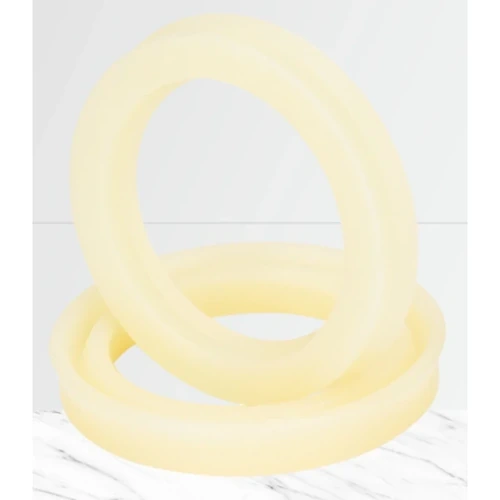
Oct 10 2026
JR Seal Leadership Joins Guangzhou Construction Machinery Industry Association on Strategic Visit to Authorized Caterpillar Dealer Sime CEL
Read More >
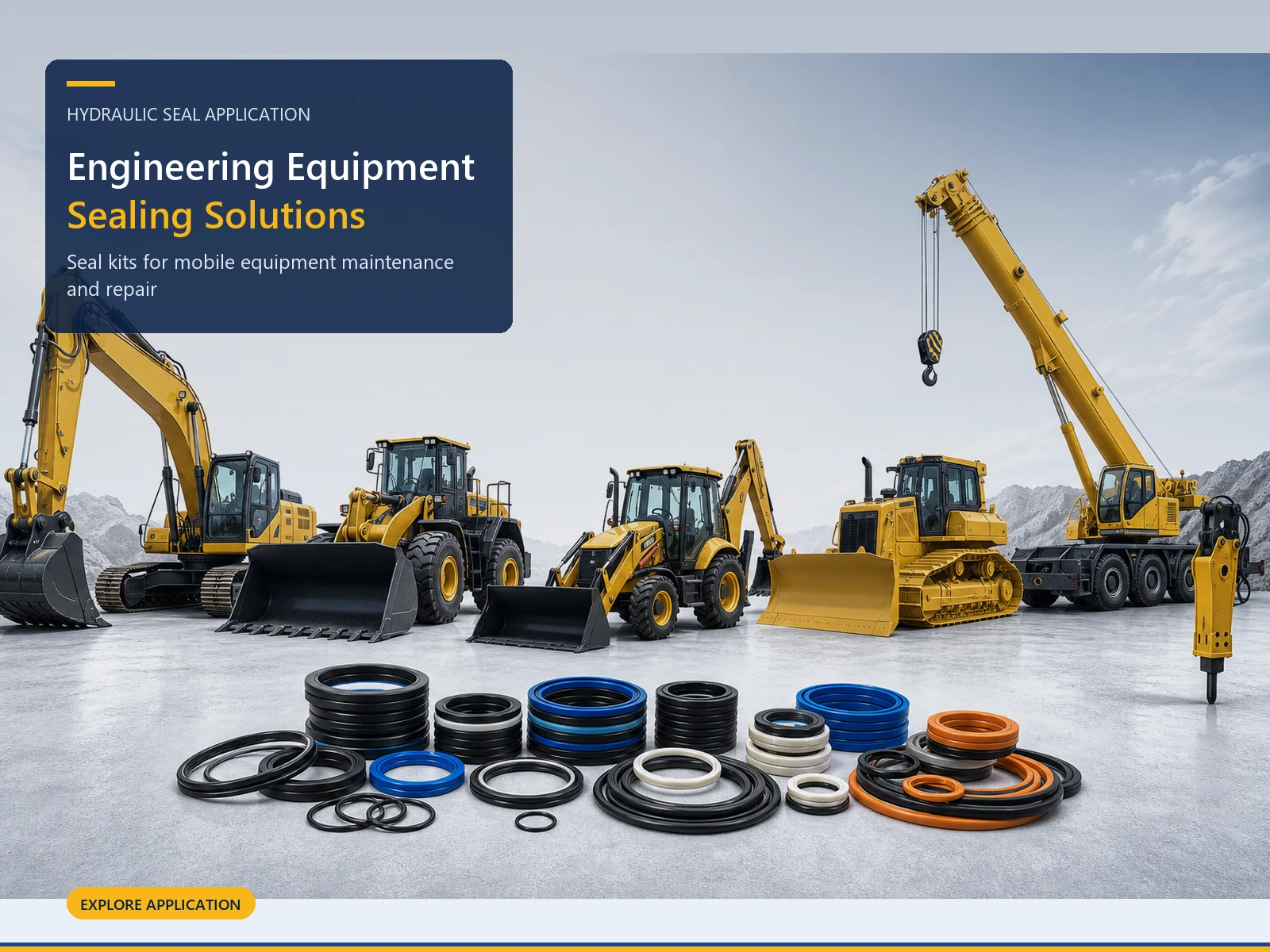
Construction equipment runs under constant load, repeated pressure peaks, vibration, heat and airborne dust. Hydraulic seals and seal kits are therefore a routine maintenance item rather than an accessory: a worn rod seal, piston seal, wiper or O-ring can lead to oil loss, drifting cylinders, overheating and unplanned downtime. This page brings together JR Seal application information for construction equipment, arranged by equipment type and by hydraulic component.
Hydraulic sealing applications for selected construction equipment models from Caterpillar, Komatsu, Hitachi, Kobelco, Volvo, Sumitomo, Kato, Daewoo, Hyundai, JCB, Case, Sany, XCMG and other major brands. Confirm the model, component and part details before ordering.
The sections below describe the general working conditions of each equipment group and the components that most often require sealing maintenance. They are written as general application guidance for maintenance planning, repair and spare parts sourcing, not as a statement of coverage for any particular machine.
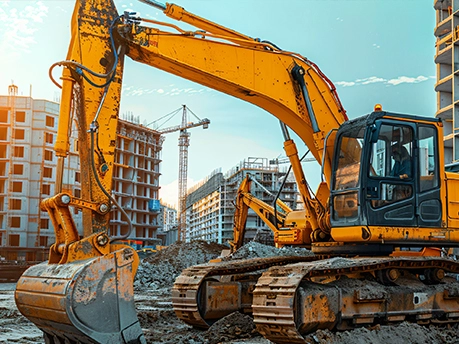
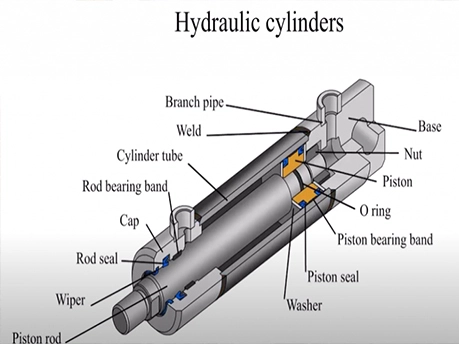
Excavators combine high hydraulic pressure with a large number of actuators, so they contain many sealing points. The most frequently serviced groups are the boom, arm and bucket cylinders, the main hydraulic pump, the main control valve, the swing motor, the travel motor, the track adjuster and the center joint. Cylinder work usually involves rod seals, piston seals, wipers, buffer seals and wear rings, while pumps and motors typically use shaft seals, O-rings and face seals.
Full component detail is available on the excavator sealing applications page.
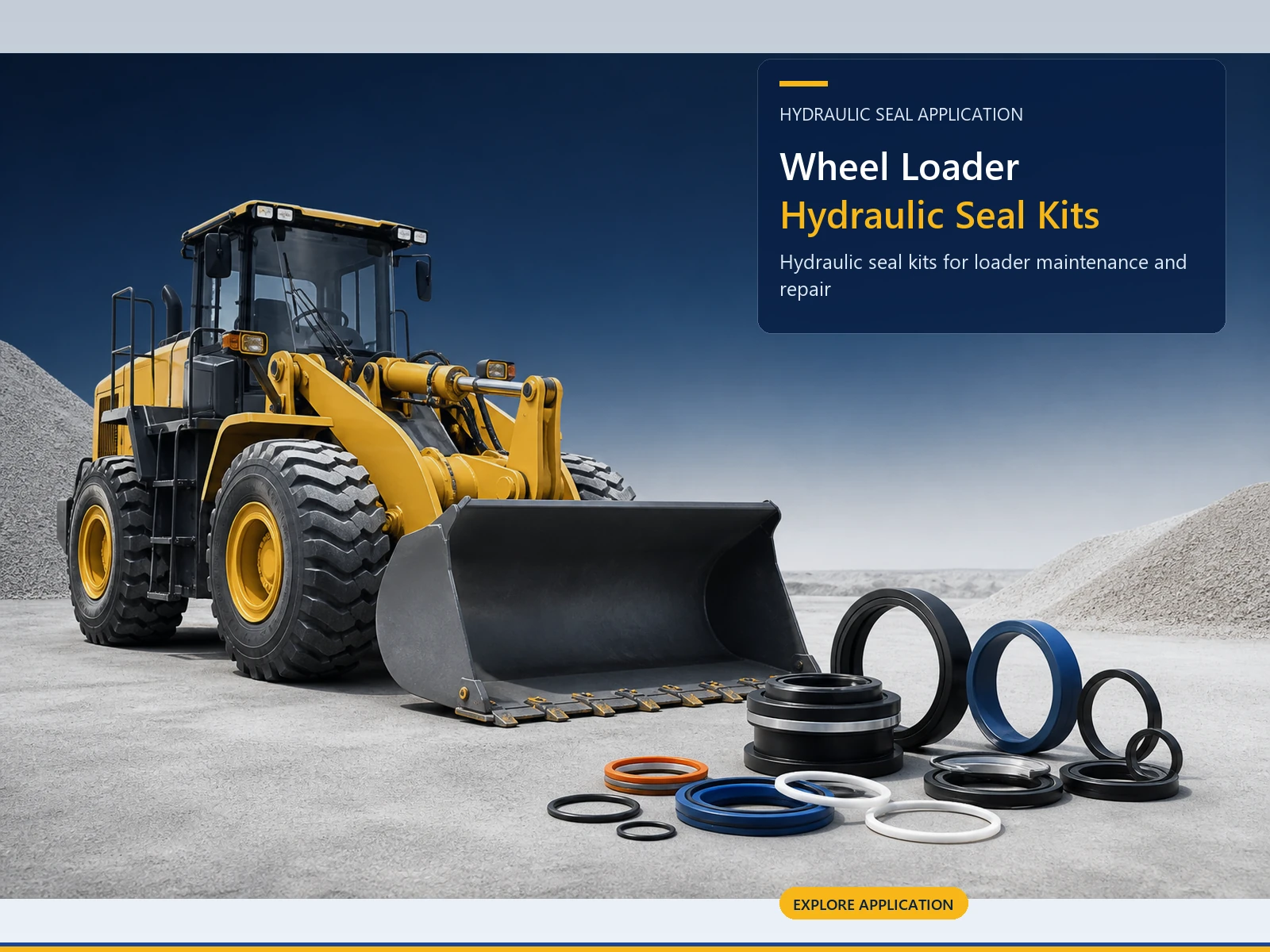
Wheel loaders repeatedly lift, carry and dump heavy material, so lift, tilt and steering cylinders see continuous cycling and shock loading. Sealing maintenance on a wheel loader most often centres on hydraulic cylinder re-sealing, together with attention to the hydraulic pump and the steering control unit as machine hours accumulate. Because loaders work in dusty yards, quarries and demolition sites, rod wipers and dust seals play a large part in how long a cylinder seal lasts.
See the wheel loader sealing applications page for the general component overview.
A backhoe loader combines a loader end and an excavator end on one carrier, so it has two independent working groups and a shared hydraulic system. Backhoe boom, dipper and bucket cylinders are typically serviced together with the loader lift and bucket cylinders, and the stabiliser legs add further cylinders that are often overlooked until they begin to creep. The compact layout of the machine makes correct seal installation important, because installation damage is a common cause of repeat leakage.
See the backhoe loader sealing applications page for more detail.
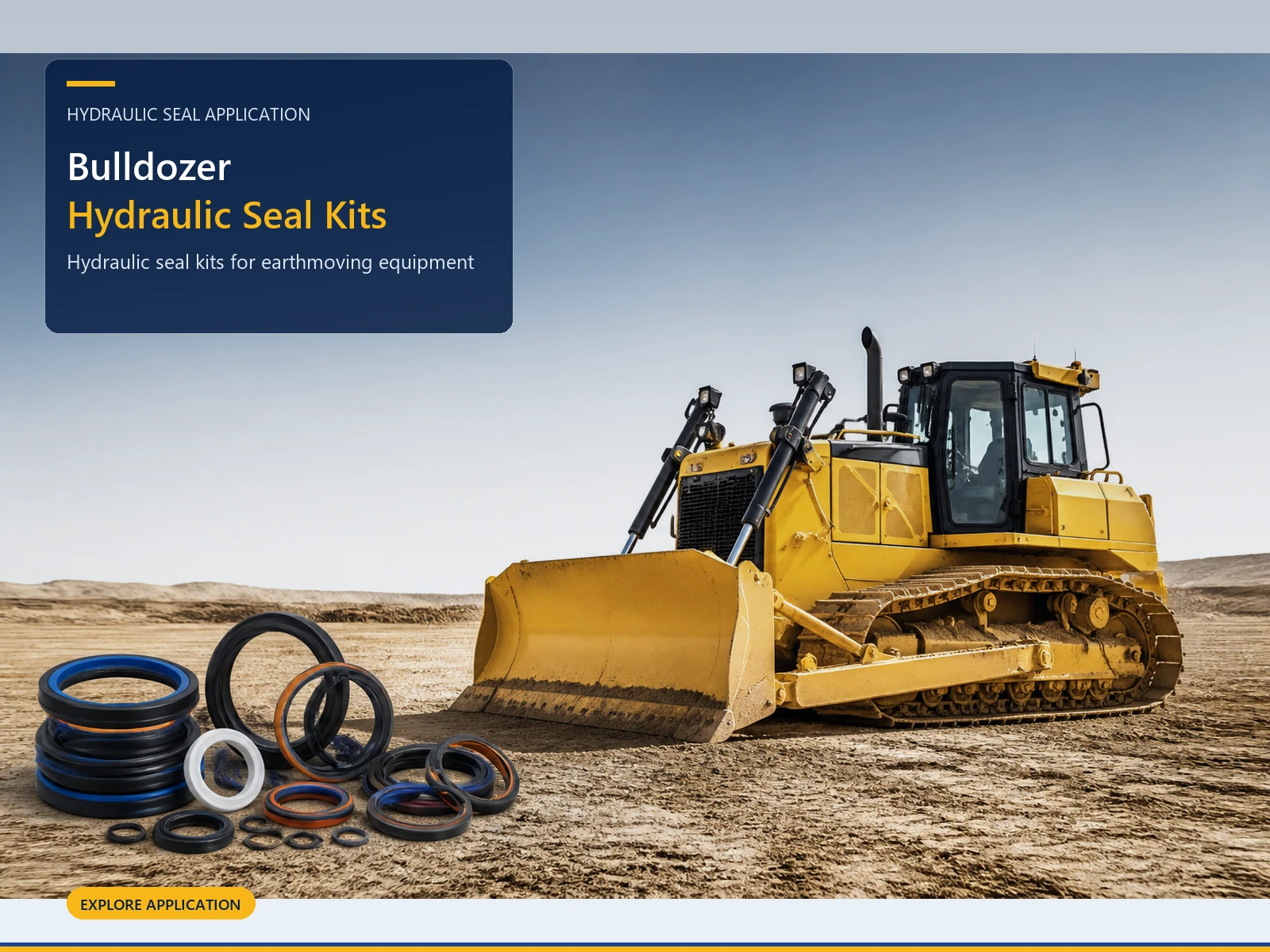
Bulldozers work in the most abrasive conditions of any earthmoving machine. Blade lift and tilt cylinders, ripper cylinders and the steering system are the main hydraulic sealing points, and undercarriage components are exposed to the same abrasive material. Dust ingestion is the dominant wear factor, which makes wiper and dust seal selection as important as the pressure seals themselves. Track adjusters are also commonly re-sealed during undercarriage service.
See the bulldozer sealing applications page for the general overview.
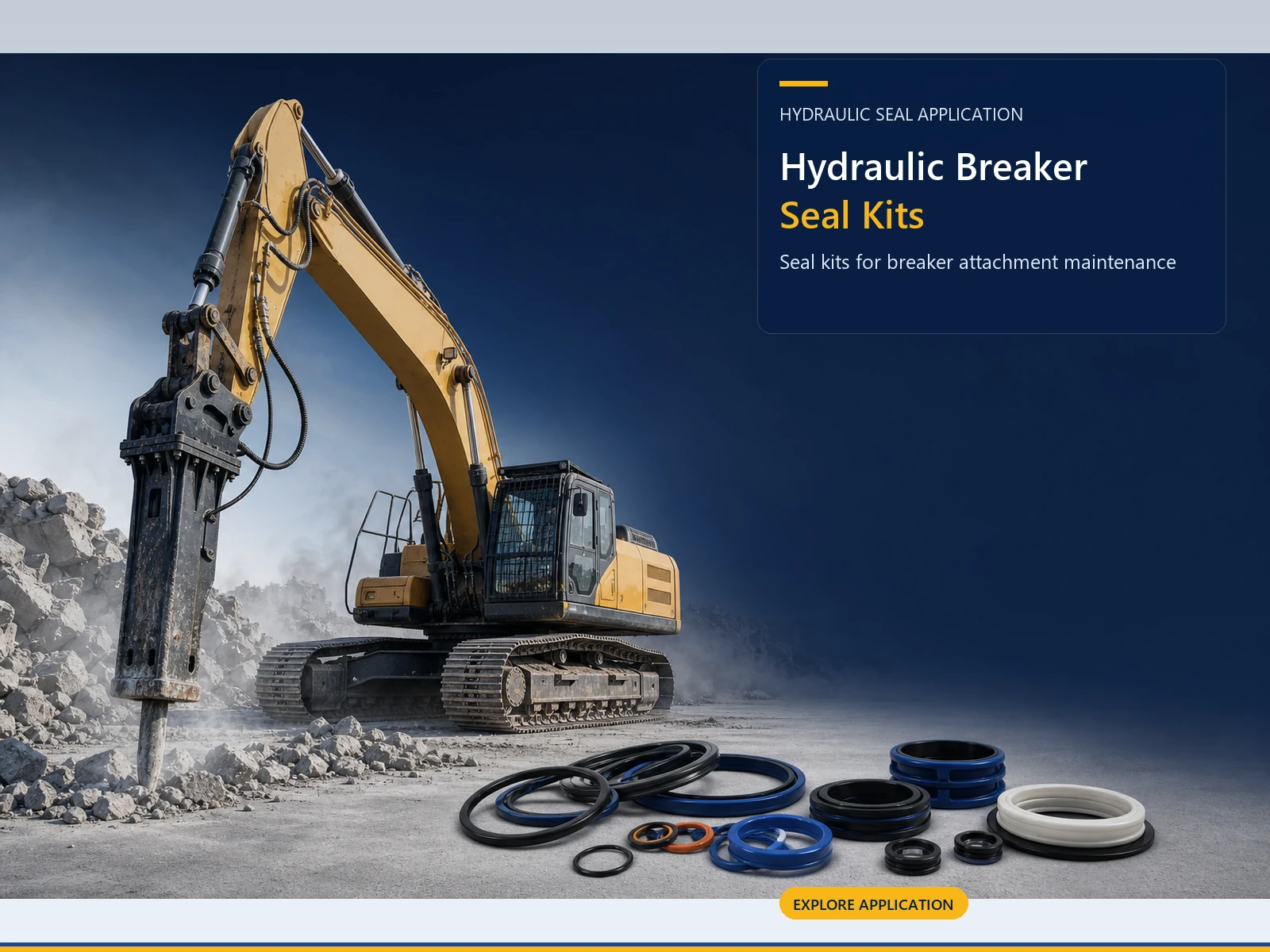
Hydraulic breakers are attachments rather than self-propelled machines, but they are among the hardest-wearing hydraulic components on site. A breaker subjects its seals to rapid pressure fluctuation, high temperature and strong vibration, and the seal kit is a normal part of breaker servicing alongside the tool, bushings and accumulator. Nitrogen-charged accumulator sections and the main body seals are the areas most often included in a breaker seal kit.
See the hydraulic breaker sealing applications page for the general overview.
Mobile cranes depend on hydraulic cylinders for outrigger extension, boom telescoping and boom luffing, and any cylinder drift has a direct effect on safety and on load positioning. Outrigger cylinders in particular work in dirty ground conditions. Sealing maintenance on mobile cranes usually follows a safety-driven inspection schedule rather than an hour meter, so it is common to re-seal cylinders that are still holding pressure but no longer holding position precisely.
See the mobile crane sealing applications page for the general overview.
Beyond the machine groups above, the same sealing principles apply to motor graders, road rollers, skid steer loaders, drilling rigs, pile drivers, wheeled and crawler dozers used in material handling, and lifting equipment such as telehandlers. In each case the practical steps are the same: identify the component, measure the seal or read the original part number, and confirm the details before ordering.
Matching is normally done from the component outwards rather than from the machine inwards. Two machines that look similar may use different cylinder or pump generations with different seal profiles. To reduce the risk of a wrong match, provide as many of the following as possible:
Confirm the model, component and part details before ordering so that the seal kit can be checked against your machine.
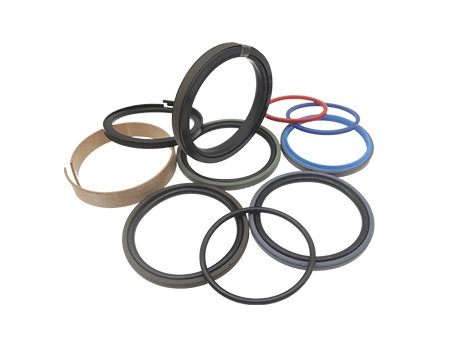
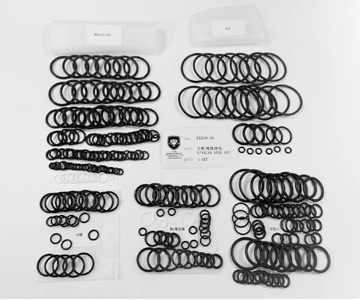
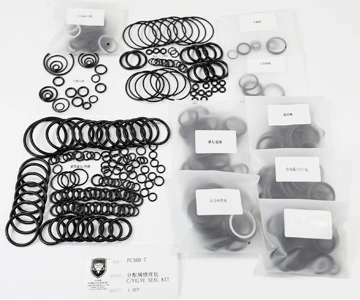
JR Seal supplies hydraulic seals and seal kits for construction equipment maintenance and repair. The most frequently requested product groups are listed below.
You can also browse the full hydraulic seal products catalogue.
Send your equipment model, hydraulic component and either the seal dimensions or the original part number. JR Seal will review the sealing application and reply with a suitable option or a request for additional details. Please contact JR Seal to start a matching enquiry.