English
 Indonesia

Oct 16 2026
Construction Equipment Seal Kit Buying Guide by Component
Read More >
The lowest quoted price is only one part of a hydraulic seal kit sourcing decision. For repair shops, distributors, equipment owners, and OEM replacement buyers, a supplier should also be evaluated by product coverage, identification accuracy, technical confirmation, quality evidence, packaging control, communication, and the conditions attached to each order.
A useful supplier comparison does not assume that every supplier offers the same kit, material, model coverage, or commercial terms. Instead, it creates a clear evidence trail from the buyer’s requirement to the supplier’s response.
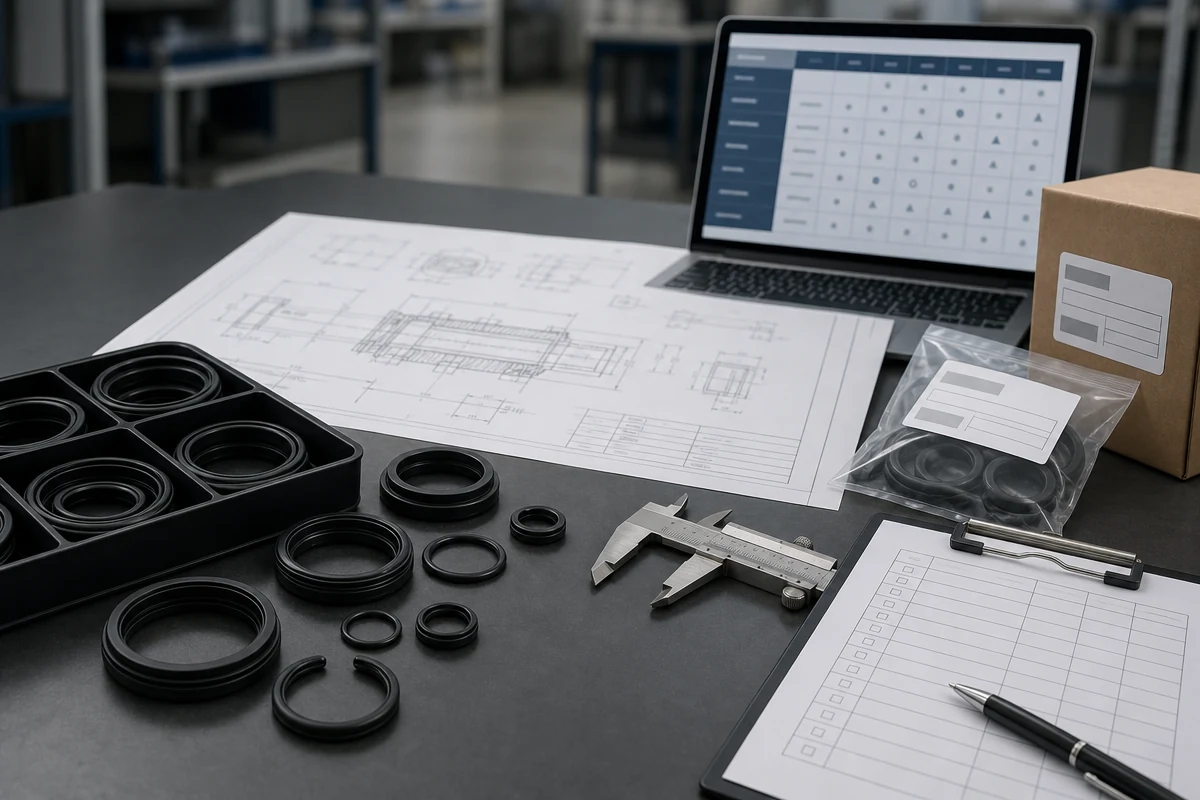
A supplier may describe itself broadly as a hydraulic seal manufacturer, but a purchasing team still needs to check whether the supplier’s public product structure is relevant to the request.
Review whether the supplier has clear categories for the required application, such as:
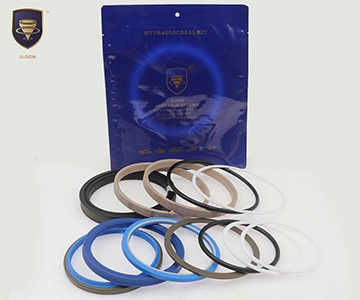
Hydraulic cylinder seal kits;
Hydraulic breaker seal kits;
Hydraulic pump seal kits;
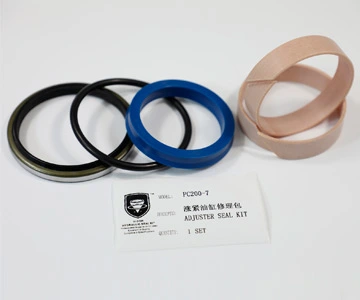
Control valve, swing motor, travel motor, or track adjuster seal kits;
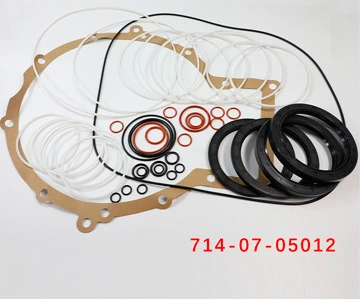
O-ring kits and individual sealing components;
Custom or OEM-related sealing requests.
JR Seal’s public website presents multiple engineering machinery sealing categories, including hydraulic cylinder, breaker, pump, valve, motor, O-ring, and other sealing products. These pages are useful starting points for a sourcing review, but a category page does not by itself confirm a specific model match, stock position, minimum order quantity, or delivery date.
A supplier comparison should test how the supplier handles identification, not only how many product names appear in a catalog.
Ask whether the supplier can review information such as:
Equipment or attachment model;
Hydraulic component or cylinder name;
OEM or reference part number;
Existing seal kit label;
Drawings, dimensions, and clear photographs;
Application and operating conditions;
Required quantity and packaging.
The supplier’s response should distinguish between a confirmed match, a possible reference, and information that still needs review. A similar product title is not proof of compatibility. The buyer should be cautious when a supplier confirms a model without asking for the evidence needed to identify it.
Material selection should be linked to the actual application and technical information. A supplier should be able to explain what information is required before confirming a material or configuration.
Depending on the request, the review may include:
Seal type and cross-section;
Available dimensions or drawing;
Medium or fluid exposure;
Temperature and pressure conditions supplied by the buyer;
Movement type, such as static or dynamic use;
Surface, groove, and installation information;
Required material or an approved alternative.
JR Seal’s public Customization page describes material selection, moulding, processing, and inspection as parts of seal manufacturing. For a real order, the buyer should still ask which information will be reviewed for the specific product and which inspection records can be provided for that order.
A sample is valuable only when both parties know what it is intended to verify. Before requesting a sample, record:
The model and component being checked;
The reference number and source of that reference;
The dimensions or drawing used for comparison;
The material or configuration to be reviewed;
The quantity of samples;
The approval criteria;
The person responsible for approval.
After receiving the sample, compare it with the agreed reference rather than approving it only by appearance. If the sample is approved for one application, do not automatically treat it as proof for another model or component.
A quality statement is easier to evaluate when it is linked to a defined process or record. A supplier comparison can include questions such as:
How are incoming materials identified and checked?
Which stages of moulding and processing are inspected?
Which dimensions or characteristics are recorded?
How are nonconforming parts handled?
Can the batch, label, or inspection record be traced to the quotation?
Which quality documents are available for the specific order?
JR Seal’s public Quality Control page discusses product quality control and inspection-related support. The public Company Profile also presents its manufacturing and product background. For procurement, these public pages should be treated as starting evidence; any certificate, inspection report, test result, or batch record should be requested and verified for the relevant product or order.
Packaging is not only a warehouse concern. Correct labels can help a distributor connect a seal kit to the right model, reference number, quantity, and customer order.
Include the following in the comparison:
Product and kit reference on the label;
Quantity per package;
Customer or internal SKU reference;
Batch or production identification, when applicable;
Packaging material and protection requirements;
Language and label format;
Whether a sample label can be reviewed before production.
Do not assume that a supplier’s standard packaging matches the buyer’s warehouse or resale requirements. Write the packaging requirement into the inquiry and request confirmation before the order is finalized.
Fast replies are useful, but the content of the reply matters more than speed alone. A strong supplier response should identify missing information, separate confirmed facts from assumptions, and state what needs to be checked next.
Compare suppliers on whether they:
Restate the requested model and component accurately;
Identify incomplete or conflicting information;
Ask for appropriate photos, dimensions, or drawings;
Explain the next confirmation step;
Keep technical and commercial questions separate;
Provide a clear contact route for follow-up.
A response that gives a confident price without confirming the product identity may create more risk than a response that requests additional evidence first.
Supplier comparison should keep technical fit and commercial terms in separate sections.
Product category and application;
Model or part-number matching;
Drawing and dimension review;
Material and operating-condition confirmation;
Sample and approval process;
Quality evidence and traceability;
Packaging and label requirements.
Quoted quantity;
Packaging quantity;
Payment and trade terms;
Shipping responsibility;
Lead time stated for the specific order;
After-sales communication;
Process for handling discrepancies.
Prices, minimum order quantities, stock, lead times, payment terms, and after-sales conditions can vary by product, quantity, destination, and confirmation status. They should be evaluated from the actual quotation rather than copied from a general page or an unrelated listing.
A procurement team can use the following structure for an evidence-based comparison:
| Evaluation area | Evidence to request | Status to record |
|---|---|---|
| Product coverage | Relevant category or product-page reference | Confirmed / needs review |
| Model and part number | Label, drawing, photo, or supplier confirmation | Confirmed / incomplete |
| Material and design | Application information and technical review | Confirmed / pending |
| Sample process | Sample reference and approval criteria | Planned / completed |
| Quality control | Applicable inspection or batch evidence | Received / pending |
| Packaging and label | Approved packaging and label details | Confirmed / pending |
| Communication | Questions, response clarity, and follow-up route | Clear / needs clarification |
| Commercial terms | Order-specific quotation and conditions | Received / pending |
| After-sales process | Discrepancy and follow-up procedure | Defined / needs confirmation |
This matrix does not rank suppliers automatically. It helps the buyer identify which decision is supported by evidence and which decision still needs confirmation.
A supplier’s website can help a buyer understand its product categories, manufacturing focus, quality-control information, customization route, and contact details. It cannot replace order-specific confirmation of every model, material, quantity, package, price, MOQ, stock position, delivery schedule, certification, or performance result.
For example, JR Seal’s public pages provide entry points to its Company Profile, Quality Control, Customization, and Hydraulic Seal Kit product categories. Buyers should use these pages together with their own model, component, drawing, photo, quantity, and packaging information when requesting a review.
Before comparing replies, send the same core information to each supplier where possible:
Which product category and component have you identified?
Which model or part number are you using as the reference?
Which information is still missing for confirmation?
What material or configuration is proposed, and what application data supports it?
Can a drawing, photo, or sample be used for approval?
What quality or inspection evidence is available for the requested order?
How will the product and package be labeled?
Which quantity, packaging, trade, payment, and delivery conditions apply to this quotation?
What is the process if the received product does not match the approved reference?
Using a consistent question set makes supplier replies easier to compare and reduces the chance that a low price hides an unresolved identification issue.
If you are comparing suppliers for an excavator, breaker, hydraulic cylinder, pump, valve, motor, or other engineering machinery application, prepare the model, component, part number, photos, dimensions, material or operating information, quantity, and packaging requirement before contacting a supplier.
Review JR Seal’s Customization and Quality Control information, then contact JR Seal with the evidence available for your request. The team can confirm which details require further review for the specific inquiry.