English
 Indonesia
Sep 11 2026
A Practical Seal Kit Part-Number Verification Workflow for Excavator Spare Parts
Read More >

Repair shops and parts distributors can reduce avoidable ordering errors by organizing hydraulic breaker seal kit information around the breaker model, kit reference, component or application, quantity, packaging, and verification status.
A stocking guide is not a substitute for a compatibility check. Breaker identification should be supported by the equipment or attachment model, the reference number, photos, dimensions, and the supplier’s confirmation before a kit is released for a specific repair. This approach keeps inventory useful without turning an unverified part number into a promise of compatibility.
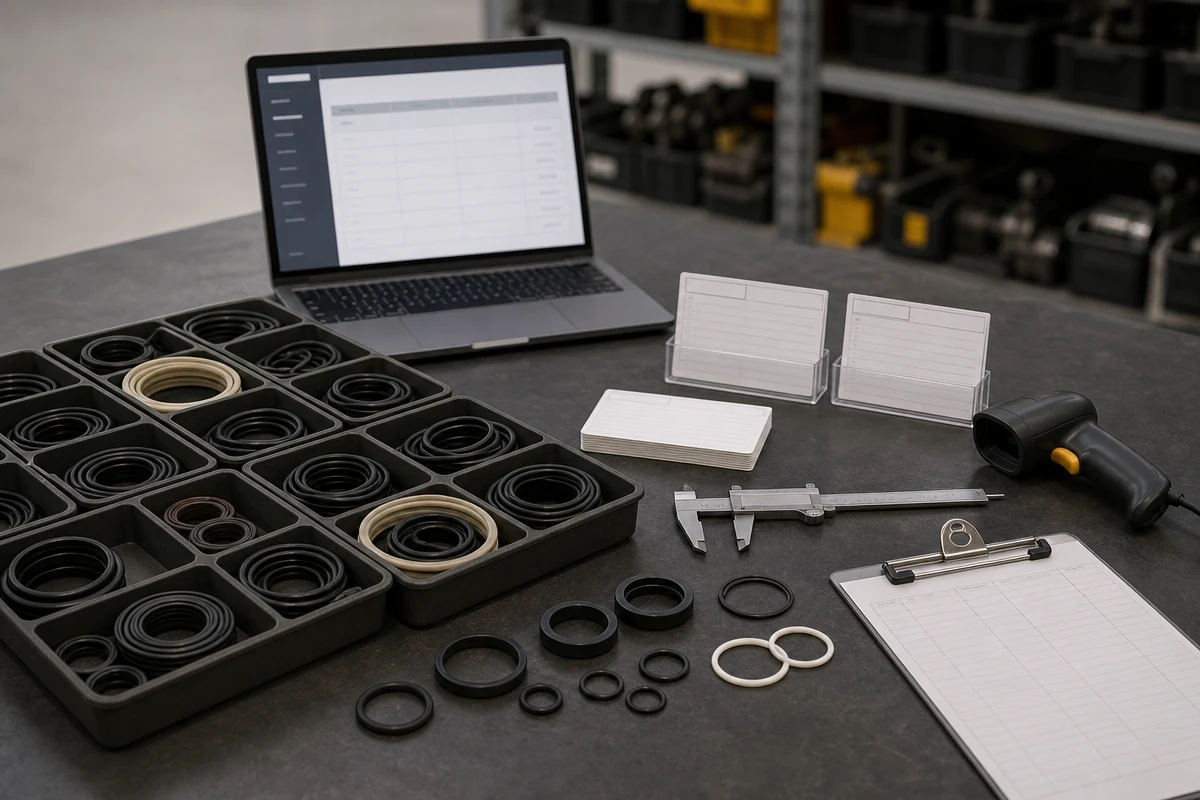
Hydraulic breaker parts are often requested using short descriptions such as “breaker seal kit” or “rock hammer seals.” Those descriptions may be insufficient for a purchasing decision. A repair shop may need a kit for a particular breaker model, while a distributor may need to manage several reference numbers that look similar but are not interchangeable.
A structured record helps separate:
The breaker or attachment model;
The kit reference supplied by the manufacturer or customer;
The component or application being repaired;
The evidence used for identification;
The quantity and packaging requested;
The current verification status.
The goal is not to create a larger catalog without evidence. The goal is to make each catalog entry easier to check, update, and explain to the buyer.
Record the model exactly as shown on the equipment documentation, nameplate, old packaging, or customer-supplied reference. Do not replace the customer’s model with a similar-looking model because the equipment belongs to the same machine class.
Also record the application in clear language, such as hydraulic breaker, rock breaker, or another verified attachment description. If the application is unclear, mark it for review instead of guessing.
A kit reference may come from an old label, supplier document, customer photograph, equipment manual, or an existing internal record. Save the source of the reference with the SKU record.
Useful source fields include:
Reference number as received;
Source type, such as label, drawing, photo, or customer message;
Date of the latest verification;
Person or team that checked the reference;
Related product-page URL, if available.
A reference without a source is weaker than a reference that can be traced back to a document or image.
The same customer may ask about seals for different parts of a hydraulic breaker system. Keep the breaker identity separate from the component or repair application. If the request concerns a particular internal area or service kit, record that information only when it is supported by the customer’s documentation or supplier confirmation.
Avoid merging records merely because the product title contains the same words. Similar wording does not establish interchangeability.
Quantity should be recorded as a request field, not as a permanent claim about stock. A distributor may require a sample, one repair kit, several kits for a service program, or a packaged batch for warehouse handling.
Record:
Requested quantity;
Sample or production requirement;
Packaging preference;
Label information required by the buyer;
Whether the packaging has been approved.
Actual availability, minimum order quantity, and delivery timing must be confirmed for the specific inquiry. They should not be copied from an unrelated listing or treated as a universal condition.
A simple status field can prevent an unverified SKU from being offered as ready for supply. For example, a distributor may use statuses such as:
| Status | Meaning |
|---|---|
| New inquiry | Information has been received but not checked |
| Reference under review | Model, kit reference, or application needs confirmation |
| Evidence received | Photos, drawings, dimensions, or documents are available |
| Supplier confirmation pending | The request has been sent for technical or commercial review |
| Sample review | A sample or reference set is being checked |
| Approved for quotation | The available evidence supports a quotation request |
| Archived or superseded | The record should not be used without a new review |
These labels are a recommended internal workflow, not a statement about JR Seal’s own internal system. Each company should adapt them to its actual process.
A distributor can organize breaker seal kit records into practical groups without publishing unsupported demand claims.
This group may include models that the distributor repeatedly receives through documented customer inquiries or historical orders. The basis for the grouping should be recorded internally. Do not describe a model as a market best seller or claim broad demand unless the company has evidence that can be published.
Long-tail records may represent less frequent models, customer-specific requests, or older equipment. These records can remain searchable, but they should carry a clear verification status and should not be presented as confirmed supply without a current check.
A review group is useful for records with unclear photos, incomplete references, conflicting dimensions, or possible duplicate entries. Holding these records for review is safer than assigning them a confident SKU name.
A practical sequence is:
Receive the breaker model, kit reference, photos, and available dimensions;
Compare the information with the relevant product category or existing record;
Identify missing or conflicting information;
Request clarification before confirming a specific match;
Review a sample or supporting document when needed;
Confirm the record fields, packaging, and quantity for the inquiry;
Treat the batch request as approved only after the preceding evidence is consistent.
This order keeps sample review connected to the actual request. It also prevents a previously used sample from being treated as proof for a different breaker model.
Wrong-model risk can enter a distributor’s workflow through copied titles, incomplete photos, similar model names, or records created without a source. The following controls are practical:
Require at least one traceable identification source for a new record;
Keep model, component, and kit reference in separate fields;
Flag records with missing dimensions or conflicting references;
Do not overwrite an old record when a new reference may represent a different version;
Record the date and basis of each verification;
Ask the supplier to confirm uncertain records before quotation or batch ordering;
Keep superseded records visible as historical references but prevent accidental quotation use.
These controls do not replace engineering review. They create a clearer handoff between the buyer, repair shop, distributor, and sealing supplier.
JR Seal’s public website includes a Hydraulic Breaker Seal Kit category. Buyers can use the category as an initial reference point, then submit the actual breaker information for a specific review.
For related sourcing discussions, you can also review Customization and Contact JR Seal. The product page or category does not replace confirmation of a particular model, quantity, packaging requirement, availability, or delivery condition.
To request a breaker model review, prepare:
Breaker or attachment model;
Kit reference or part number, if available;
Clear photos of the label and existing kit;
Relevant dimensions or drawings;
Component or repair application;
Requested quantity;
Packaging and label requirements;
Destination market and timing requirements.
If any item is unavailable, say so in the inquiry. Missing information is safer to identify than to fill with an assumption.
If you are building a breaker seal kit inventory, reviewing an old warehouse record, or preparing a repair-shop request, start with the model and reference evidence before assigning a final SKU.
Check Your Breaker Model with JR Seal, or contact the team with your model, reference number, photos, dimensions, quantity, and packaging requirements.