English
 Indonesia

Oct 13 2026
Travel Motor vs Swing Motor Seal Kit Requests: What Buyers Should Separate
Read More >
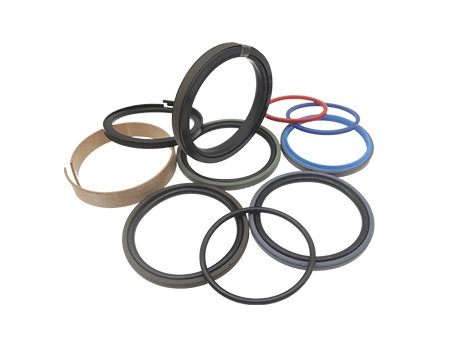
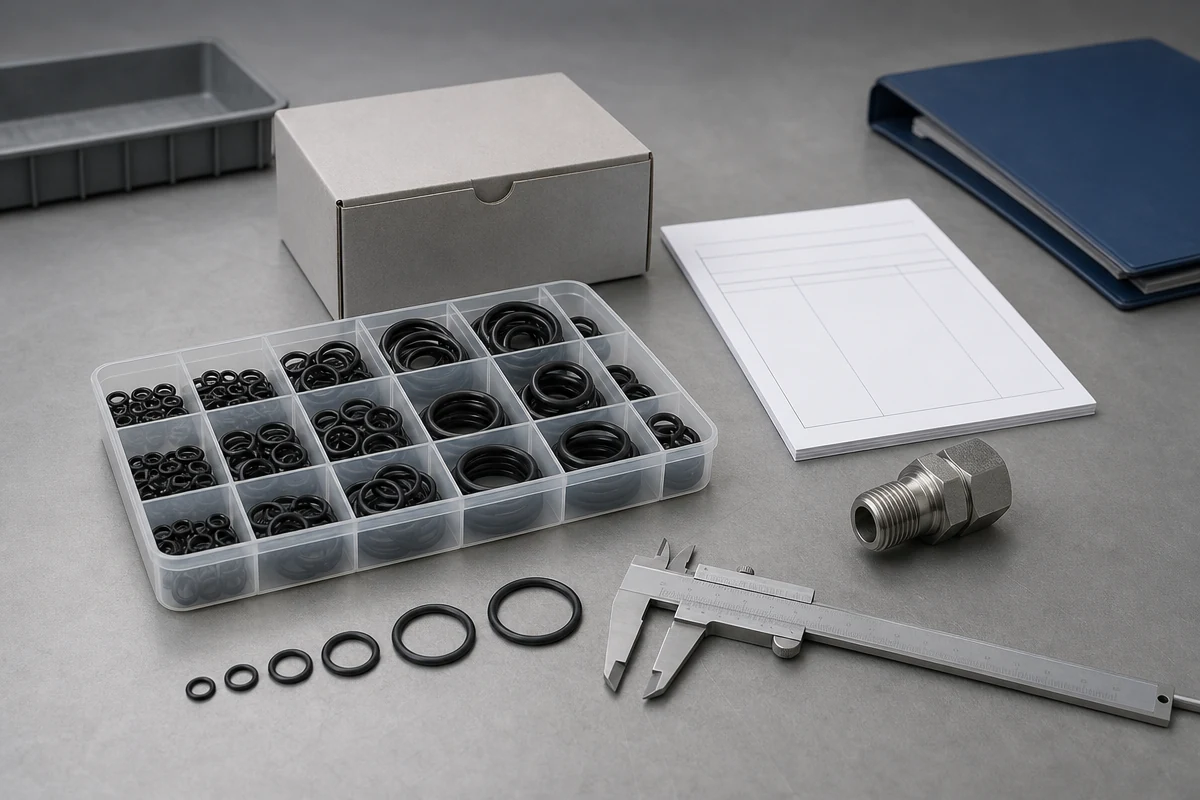
A hydraulic O-ring kit is easier to source when the request includes more than a product name. For maintenance teams, repair shops, and parts distributors, the useful specification normally connects the O-ring size, material requirement, fitting or connection type, application, quantity, packaging, and equipment reference.
A general assortment may be useful for workshop organization, but it should not be treated as proof that every ring in the box matches a particular hydraulic connection. The correct purchasing process starts by defining the application and identifying which details are confirmed, which are missing, and which must be reviewed by the supplier or engineer.
This guide focuses on how to prepare an O-ring kit specification for procurement. It does not replace a drawing, engineering approval, material compatibility review, or application-specific supplier confirmation.
Before requesting a quotation, prepare a short specification record. The exact fields depend on the equipment and connection, but the following structure gives a supplier enough context to identify missing information.
| Specification field | What to provide | What still needs confirmation |
|---|---|---|
| Application | Equipment, assembly, or maintenance task | Whether the intended use is static, dynamic, or installation-specific |
| O-ring size | Standard, series, drawing, or measured dimensions from a reliable source | Whether the measurement method and tolerance are suitable |
| Material requirement | Existing specification, approved material, or service conditions | Compatibility with fluid, temperature, pressure, and movement |
| Fitting type | Connection or fitting family, with drawing or part reference where available | Exact groove, port, or sealing arrangement |
| Quantity | Required kit quantity and expected order quantity | Whether the quantity refers to pieces, kits, or maintenance events |
| Packaging | Individual, kit box, labeled bag, or other requested format | Label language, identification, and packing instructions |
| Equipment reference | Machine model, component, part number, or drawing | Whether the reference identifies the exact application |
| Evidence | Photos, drawings, old-part labels, and previous records | Legibility and current revision status |
Do not leave an unknown field looking like a confirmed value. Mark it as pending and list the action needed to close the gap.
Size and fitting type are related, but they are not interchangeable.
A diameter or cross-section reference may help identify a ring, while the fitting type describes the connection or sealing arrangement where the ring is used. Two requests can mention similar dimensions but still require different review because the groove, port, compression, assembly movement, or connection design is different.
For that reason, an RFQ should include both:
The size reference or dimensional evidence;
The fitting or connection reference;
A drawing or clear photograph when the arrangement is not obvious;
The equipment or component where the ring will be installed.
The purpose is not to force every customer to use a specific naming system. It is to prevent one partial identifier from being treated as a complete specification.
A static application and a dynamic application can require different engineering review. In a static arrangement, the O-ring remains in a fixed sealing position after assembly. In a dynamic arrangement, the sealing interface may experience movement, friction, pressure changes, or changing operating conditions.
When preparing a kit request, state which situation applies if it is known. If it is not known, provide the equipment, component, movement description, drawing, or photograph and ask for confirmation.
Do not assume that an O-ring selected for one use can automatically be transferred to another use simply because the size appears similar. The application context is part of the specification.
Use the most reliable size reference available. Depending on the application, that may be:
A recognized standard or series reference;
A supplier or OEM reference number;
A drawing with dimensions and revision information;
A verified catalog reference;
A measured old part, when the measurement method and condition are documented;
A groove or fitting drawing provided by the equipment manufacturer.
If the ring is measured from an old part, note whether it is worn, compressed, cut, swollen, or permanently deformed. A damaged part may not represent the original dimensions accurately.
The request should also state whether the desired value refers to the O-ring itself, the groove, the fitting, or a kit reference. These are different types of information and should not be placed in one unlabeled number field.
Material selection should follow the actual service conditions and available engineering evidence. A procurement request can include:
The material already specified in an approved drawing or record;
The fluid or media involved;
Operating temperature information, when documented;
Pressure information, when documented;
Movement and friction conditions;
Exposure to dust, water, chemicals, or other environmental factors;
A request for the supplier to confirm a proposed material against the application.
NBR and FKM are common material terms in O-ring discussions, and JR Seal’s public site includes O-ring product categories and kit-box pages. However, a material name alone is not a universal performance guarantee. Without a product-specific test report, drawing, formulation record, or engineering confirmation, do not publish an absolute pressure, temperature, chemical-resistance, or service-life claim.
If the customer asks for a material substitute, record the original requirement and the proposed alternative as separate fields. The substitution should remain pending until the responsible technical party confirms it.
Fitting information is most useful when it includes the terminology used by the customer plus supporting evidence. Depending on the request, collect:
Fitting or connection family;
Port or assembly reference;
Equipment and component name;
Drawing or catalog reference;
Groove or sealing arrangement information;
Photograph showing the fitting and surrounding context;
Quantity and whether the ring is supplied individually or in a kit.
Avoid turning an abbreviation into a confirmed standard when the source does not define it. If an RFQ uses a term such as ORB or ORFS, keep the customer’s wording and request the relevant fitting, drawing, or part reference needed for review.
A workshop may use an assortment kit to organize commonly requested rings. A machine-specific or component-specific kit may be more appropriate when the request is tied to a defined repair job or equipment reference.
Before choosing the format, ask:
Is the kit for general workshop maintenance or one application?
Does the customer need a range of sizes or a defined quantity of one ring?
Does each piece need identification?
Does the kit require a part-number label or packing list?
Will the distributor store the items by size, material, application, or customer reference?
Is the equipment model and component already confirmed?
The answer affects how the request should be labeled and reviewed. It does not prove that a particular kit configuration is available until the supplier confirms it.
A request becomes easier to quote when it distinguishes between piece count, kit count, and order quantity.
For example, the record can separate:
Required pieces per maintenance task;
Number of maintenance tasks or kits requested;
Sample quantity, if a sample is needed;
Packing unit requested by the customer;
Label and identification requirements;
Destination and documentation requirements, when applicable.
Do not insert a standard MOQ, stock quantity, or lead time unless it has been confirmed for the specific request. Those values can vary by product, configuration, material, packaging, and order details.
A clear evidence pack can include:
Equipment brand and model;
Hydraulic component or fitting name;
OEM or reference part number;
O-ring size or drawing;
Material requirement and service conditions;
Fitting type or connection information;
Quantity and packaging request;
Clear photos with labels and scale where appropriate;
The requested sample or quotation scope.
Photos should be clear enough to show the relevant part and should not be the only evidence when the application needs dimensions or a drawing. A photograph can support identification, but it may not prove an unseen dimension, material grade, or compatibility claim.
State whether the request supports routine workshop maintenance, a specific repair, a distributor catalog, or a new equipment application.
Record the equipment model, component, fitting type, part number, and available drawings or photos.
Mark each value as confirmed, customer-provided, supplier-provided, or pending review. This makes the next action visible.
Ask the supplier or responsible engineer to review the size, material, fitting type, and service conditions together. Do not approve the record based on size alone.
If a sample, drawing, packing list, or label proof is required, record it as a separate checkpoint before a repeat or batch order.
Save the source documents, supplier response, approved description, and revision date with the SKU or quotation reference.
JR Seal publicly presents an O-Ring Series category and an O Ring Kit Box category. These pages are useful starting points for identifying the relevant product family, but a specific application still requires the model, component, fitting, size, material requirement, quantity, and supporting evidence to be reviewed.
For a custom specification or quotation request, use the Customization page and provide the available application details. You can also contact JR Seal with the fitting type, size reference, material requirement, quantity, and photographs or drawings.
Is the application described?
Is the equipment and component identified?
Is the O-ring size source recorded?
Is the fitting or connection type stated separately?
Is the material requirement supported by a document or service-condition description?
Are pressure and temperature values documented rather than guessed?
Is the quantity expressed as pieces, kits, samples, or orders?
Is the packaging and labeling request clear?
Are photos, drawings, and part numbers readable?
Are pending technical questions listed?
Does the request avoid unsupported compatibility or performance claims?
A useful hydraulic O-ring kit specification connects size, material, fitting type, application, quantity, packaging, and evidence. The goal is not to fill every field with a number. The goal is to give the supplier enough information to identify what can be confirmed, what remains pending, and what must be reviewed before ordering.
For an application-specific request, send the fitting type, size reference, material requirement, quantity, equipment details, and available photos or drawings to JR Seal for review.