English
 Indonesia
Oct 10 2026
JR Seal Leadership Joins Guangzhou Construction Machinery Industry Association on Strategic Visit to Authorized Caterpillar Dealer Sime CEL
Read More >

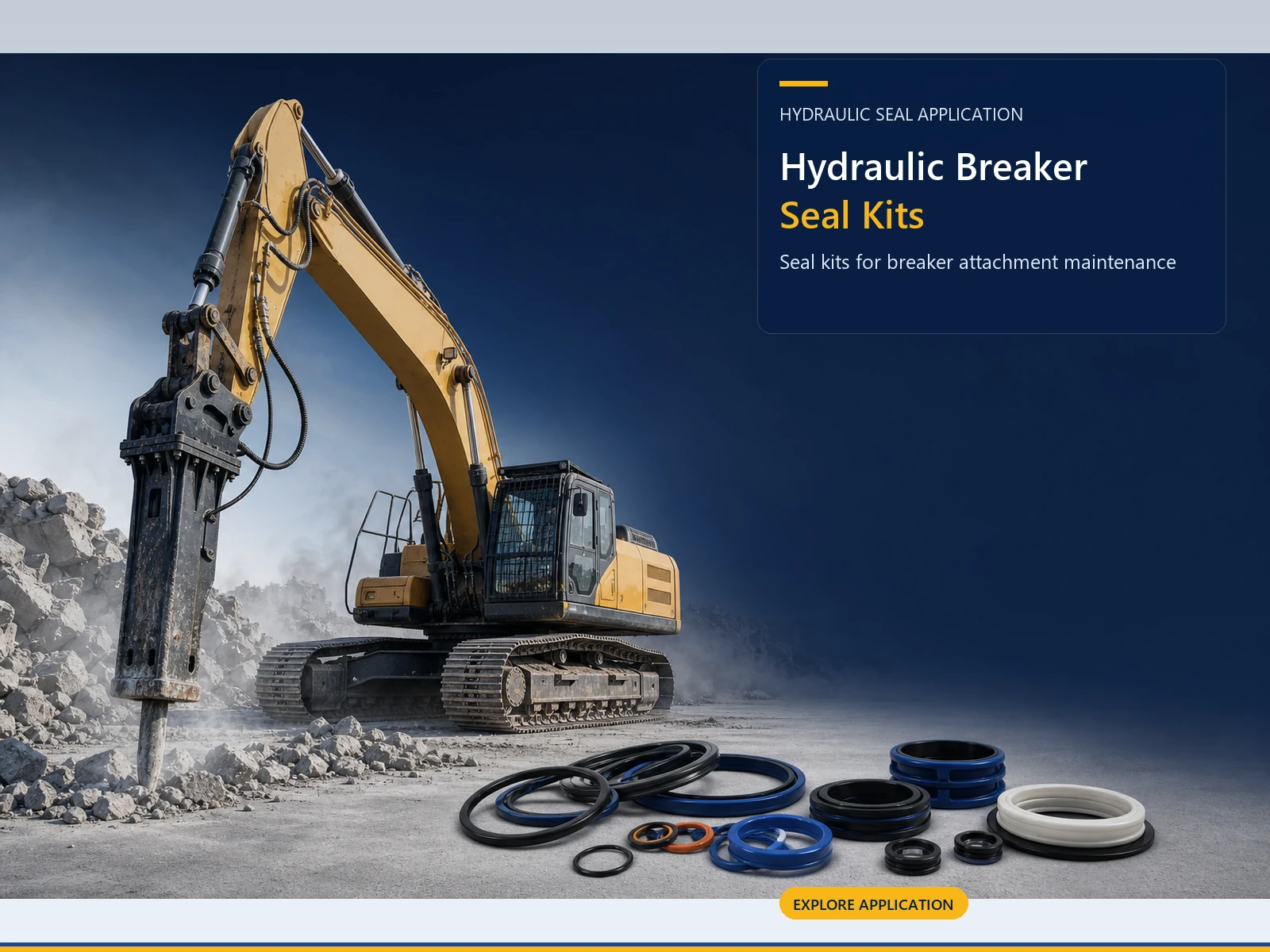
A hydraulic breaker is an attachment rather than a complete machine, but it is one of the hardest-wearing hydraulic assemblies on site. Its seals face rapid pressure fluctuation, high oil temperature and continuous vibration, and the breaker is normally serviced on a fixed interval regardless of how much it has actually been used. Sealing work is a routine part of breaker maintenance, alongside the tool, the bushings and the gas-charged sections.
This page is general application information for hydraulic breaker attachment sealing. Hydraulic sealing applications for selected breaker models and carriers from major brands. Confirm the breaker model, component and part details with JR Seal for matching support.
Breakers are used for demolition, rock excavation, trenching through rock, concrete breaking and secondary breaking at quarries. The piston inside the breaker cycles very rapidly, and each cycle sends a pressure pulse through the seal stack. That combination of speed, pressure and temperature is what makes breaker seals wear differently from cylinder seals on a machine: the failure mode is more often hardening, extrusion and loss of elasticity than simple abrasion.
Vibration is the second factor. It works on the joints and connections around the breaker, and it means that a seal which appears to be in acceptable condition may still need replacement once the breaker is opened for service. Nitrogen-charged sections should only be handled by personnel with the correct equipment and procedure.
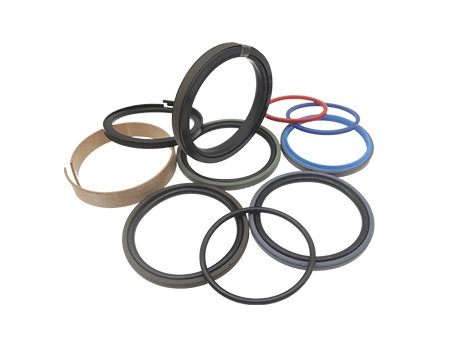
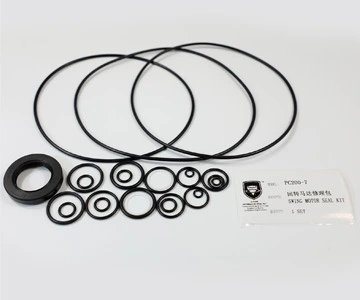
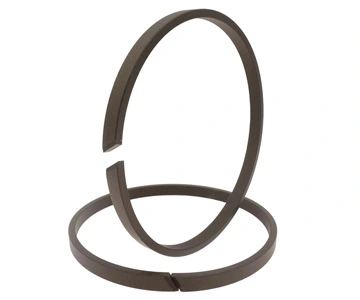
A hydraulic breaker seal kit generally covers the seals in the main body and the piston area, together with the seals around the accumulator or gas-charged section where the design uses one. The front end of the breaker, including the tool, retaining pins and bushings, is a wear group in its own right and is dealt with separately from the sealing group.
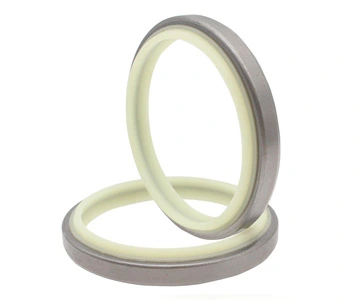
See the hydraulic breaker seal kit page for the general seal composition, and the dust seal and buffer seal pages for individual sealing elements.
Confirm the breaker model, component and part details with JR Seal. General component information is provided for maintenance planning, not as a statement of coverage for a specific attachment.
Provide the breaker make and model, the carrier machine it is mounted on where relevant, the hydraulic component or seal group involved, and the seal dimensions or the original part number. Photographs of the removed seals are particularly useful for breakers, because the seal stack varies considerably between designs.
Quantity, packing preference and destination port should also be confirmed so that the enquiry can be answered completely.
You can also browse the full hydraulic seal products catalogue.
Hydraulic Seals Application – overview of sealing applications for construction equipment.
All Construction Equipment Applications – sealing solutions by equipment type and hydraulic component.
Excavator Hydraulic Seal Kits – excavator sealing applications by component.
Wheel Loader Hydraulic Seal Kits – wheel loader cylinder and equipment maintenance.
Backhoe Loader Hydraulic Seal Kits – backhoe loader hydraulic equipment maintenance.
Bulldozer Hydraulic Seal Kits – earthmoving equipment sealing applications.
Mobile Crane Hydraulic Seal Kits – lifting equipment sealing applications.
Breaker maintenance is usually organised as a fixed service interval rather than as a response to failure. The tool, the bushings and the seals are normally inspected and replaced together, because the working conditions that wear one of these groups also affect the others. Opening the breaker only to find that the front end also needs work usually costs more downtime than planned service.
Handling of the gas-charged sections of a breaker requires the correct equipment and procedure, and this work should be carried out by personnel who are familiar with the specific breaker design. The sealing components themselves can be supplied separately, but the assembly procedure should always follow the manufacturer's method for that model.
Because breaker seal stacks differ considerably between designs, matching is best done with the breaker model plus either a part number or photographs of the removed seals. Individual sealing elements such as the dust seal and buffer seal can also be supplied when only part of the assembly requires replacement.
Confirm the breaker model, component and part details with JR Seal for matching support.
Service intervals are usually defined by the breaker manufacturer and by how the attachment is used. In heavy demolition work the seals may be replaced as part of a scheduled service rather than after a visible failure.
Not always. Depending on the design and the condition of the parts, individual seals may be sufficient, but the assembly should be inspected first because vibration damage is often not limited to one seal.
Send the breaker model, the carrier machine where relevant, and either the seal dimensions or the original part number. JR Seal will review the application and reply with a suitable option or a request for further details. Please contact JR Seal to start a matching enquiry.