English
 Indonesia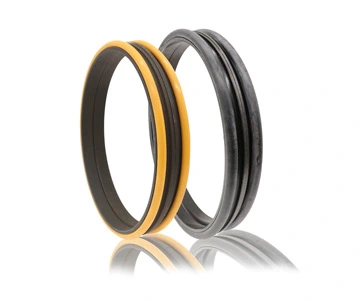

Oct 10 2026
JR Seal Leadership Joins Guangzhou Construction Machinery Industry Association on Strategic Visit to Authorized Caterpillar Dealer Sime CEL
Read More >
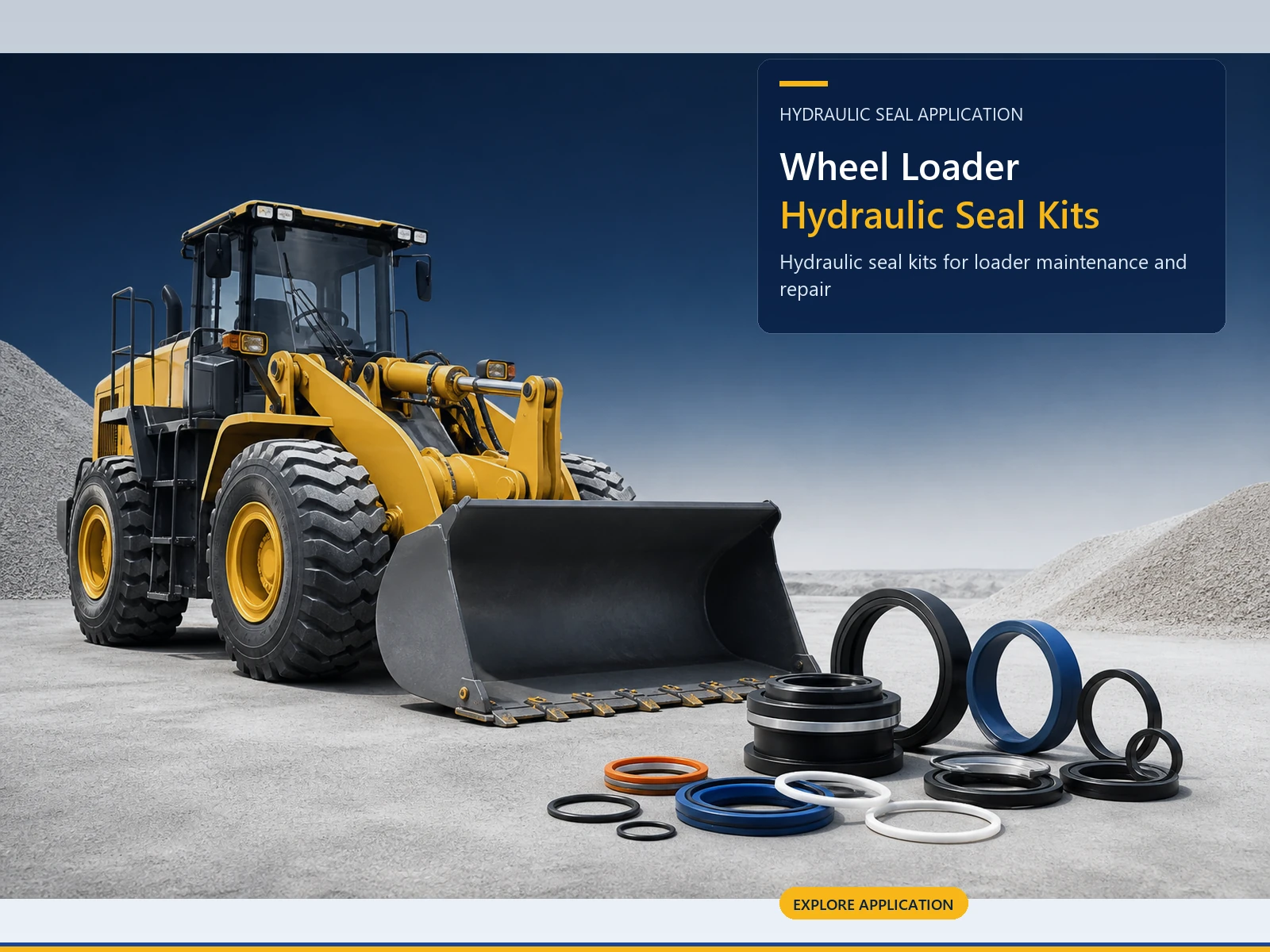
A wheel loader spends its working day lifting, carrying and dumping heavy material. The lift, tilt and steering cylinders cycle continuously under load, so their seals are exposed to pressure peaks, shock loading and abrasive dust at the same time. In practice, cylinder re-sealing is the most common hydraulic sealing job on a wheel loader, and the machine is usually kept working with a leaking cylinder until the leak becomes a maintenance priority.
This page is general application information for wheel loader hydraulic sealing, written for maintenance planning, repair and spare parts sourcing. Hydraulic sealing applications for selected wheel loader models from Caterpillar, Komatsu, Hitachi, Kawasaki, Volvo, Doosan, Hyundai, JCB, Case, XCMG, LiuGong and other major brands. Confirm the wheel loader model, component or part details with JR Seal before ordering.
Wheel loaders work in quarries, yards, demolition sites, ports and agricultural operations. The common factors behind seal wear are the same in all of them: fine abrasive dust drawn into the rod wiper, high oil temperature during repeated loading cycles, side load on the rod from the linkage geometry, and pressure spikes when the bucket hits a pile. Because the wiper and dust seal sit in the most exposed position on the cylinder, they are usually the first items to fail, and once they are damaged the pressure seals behind them follow quickly.
Steering cylinders on articulated loaders also deserve attention. They work at almost every steering movement and are often overlooked until the machine becomes unstable or difficult to steer.
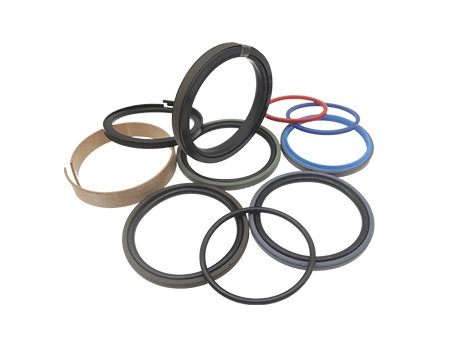
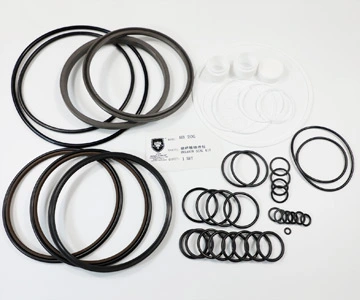
Hydraulic cylinder re-sealing covers the lift cylinders, tilt cylinders and steering cylinders, and the seal groups involved are rod seals, wipers or dust seals, buffer seals, piston seals, wear rings and static O-rings with backup rings. Where the machine has a quick coupler, its cylinder is a further sealing point that is easy to miss during a planned repair.
Beyond the cylinders, wheel loaders also use a hydraulic pump, a main control valve and, on larger machines, a transmission with its own sealing requirements. Pump and control valve work is less frequent than cylinder work, but the same matching principles apply.
To check a possible match, please provide the wheel loader model and series, the hydraulic component involved, and the seal dimensions or original part number. A photograph or cross-section drawing of the removed seal is very helpful, particularly where no part number is available. Quantity, packing preference and destination port should also be confirmed so that the enquiry can be answered completely.
Confirm the wheel loader model, component or part details with JR Seal before ordering. Matching is normally done from the component, because the same loader model can be built with different cylinder generations over its production life.
JR Seal supplies hydraulic seals and seal kits used in wheel loader maintenance and repair.
You can also browse the full hydraulic seal products catalogue.
Hydraulic Seals Application – overview of sealing applications for construction equipment.
All Construction Equipment Applications – sealing solutions by equipment type and hydraulic component.
Excavator Hydraulic Seal Kits – excavator sealing applications by component.
Backhoe Loader Hydraulic Seal Kits – backhoe loader hydraulic equipment maintenance.
Bulldozer Hydraulic Seal Kits – earthmoving equipment sealing applications.
Hydraulic Breaker Hydraulic Seal Kits – attachment sealing applications.
Mobile Crane Hydraulic Seal Kits – lifting equipment sealing applications.
Wheel loader cylinder re-sealing is normally planned around the machine's service schedule rather than carried out only after a failure. Because the lift and tilt cylinders on a loader are large and easy to reach, they can be inspected visually during routine greasing: check for an oil film on the rod, oil around the wiper, and any change in how the bucket holds position when the machine is parked with the load raised.
Where a cylinder is re-sealed, the rod surface is worth checking carefully before the new seals are fitted. A scored or corroded rod will damage a new wiper and rod seal within a short time, and the resulting repeat failure is often blamed on the seal rather than on the rod. The same applies to the bore and to the condition of the wear rings.
For loaders working in quarries, cement plants and demolition sites, the working environment is the main driver of seal life. Keeping the wiper in good condition and cleaning the cylinder area before opening the assembly will extend the service interval more than any other single step. Where a machine is used in a particularly abrasive application, it can be worth keeping a spare cylinder seal kit on site so that a repair can be completed without waiting for parts.
Confirm the wheel loader model, component or part details with JR Seal before ordering so that the seal kit can be checked against your machine.
The most common reasons are installation damage to the new seal, scoring or corrosion on the rod or bore, worn wiper allowing dust into the assembly, or an incorrect seal profile for the operating pressure.
Yes. Individual seals, wipers, buffer seals and O-rings can normally be supplied in the required quantity.
Send your wheel loader model, the hydraulic component and either the seal dimensions or the original part number. JR Seal will review the application and reply with a suitable option or a request for further details. Please contact JR Seal to start a matching enquiry.